
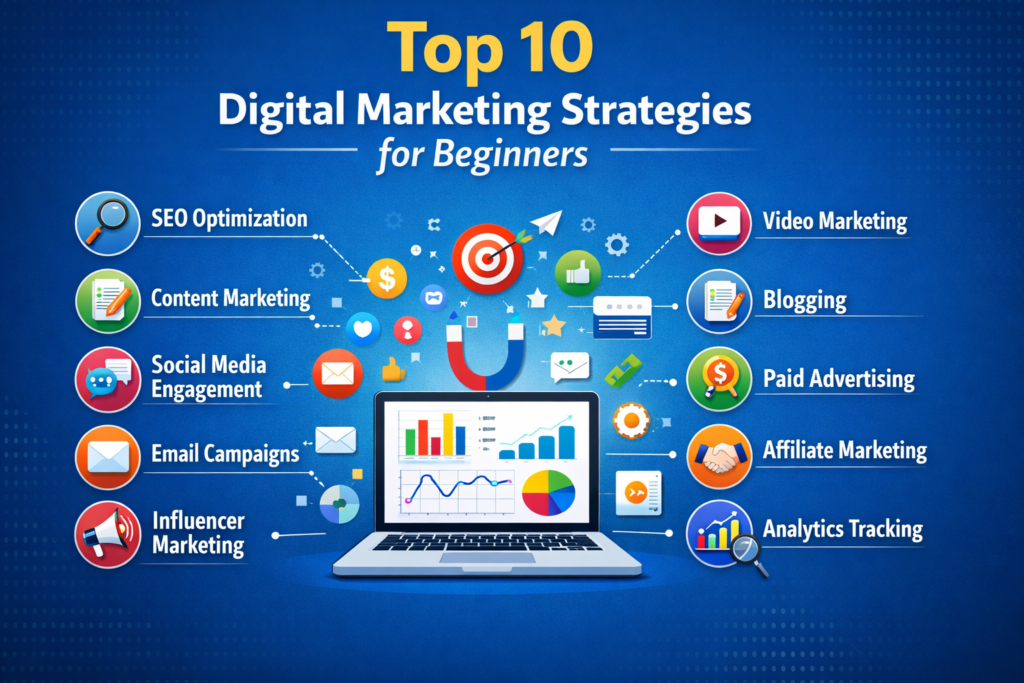
Introduction to Digital Marketing Strategies for Business
Digital marketing strategies play a critical role in business growth in today’s competitive online landscape. As more customers search, shop, and interact online, businesses must adopt smart and effective digital marketing strategies to stay ahead. Without a structured plan, companies struggle to generate traffic, leads, and sales. The right digital marketing strategies help increase brand visibility, improve customer engagement, and boost revenue. Whether you run a startup, small business, or growing company, implementing proven digital marketing techniques can accelerate long-term success and create a strong online presence.
Why Digital Marketing Strategies Matter
A clear digital marketing strategy ensures that businesses focus on the right audience using the right channels.
Better Online Visibility
Strong digital marketing strategies improve search engine rankings and social media presence. When customers can easily find your business online, trust and credibility increase.
Higher Conversion Rates
Targeted marketing campaigns attract qualified leads who are more likely to convert into paying customers.
Sustainable Business Growth
Consistent digital marketing efforts create long-term growth instead of short-term results.
Below are the most effective digital marketing strategies businesses should implement in 2026.
SEO Optimization
Search Engine Optimization (SEO) is the foundation of digital marketing strategies. SEO improves website ranking on search engines like Google. By targeting the right keywords, optimizing website content, improving site speed, and building backlinks, businesses can increase organic traffic. SEO is cost-effective and delivers long-term results. A well-optimized website attracts customers actively searching for your products or services.
Content Marketing
Content marketing focuses on creating valuable and informative content for your audience. Blog posts, guides, infographics, and videos help educate customers and build trust. High-quality content improves SEO rankings and positions your brand as an industry authority. Instead of directly selling, content marketing provides solutions, which naturally attracts potential buyers and increases engagement.
Social Media Marketing
Social media marketing allows businesses to connect directly with their audience. Platforms like Instagram, Facebook, LinkedIn, and Twitter help promote products, share updates, and build relationships. Posting consistently and engaging with followers strengthens brand loyalty. Paid social media ads can further boost reach and target specific demographics for better results.
Email Marketing Campaigns
Email marketing remains one of the highest ROI digital marketing strategies. Businesses can send newsletters, promotional offers, and personalized messages to subscribers. Automated email sequences help nurture leads and maintain customer relationships. When done correctly, email marketing increases repeat purchases and customer retention.
Pay-Per-Click Advertising (PPC)
PPC advertising helps businesses generate instant traffic. Platforms like Google Ads allow companies to display ads to users searching for specific keywords. Unlike SEO, PPC delivers immediate results. Businesses only pay when someone clicks on the ad, making it measurable and budget-friendly when optimized properly.
Influencer Marketing
Influencer marketing leverages the audience of social media influencers to promote products. Partnering with influencers increases brand credibility and trust. When influencers recommend a product, followers are more likely to consider purchasing. This strategy works especially well for fashion, beauty, fitness, and lifestyle brands.
Video Marketing
Video marketing continues to dominate digital platforms. Short videos, tutorials, product demos, and live sessions increase engagement and retention. Platforms like YouTube and Instagram Reels allow businesses to showcase their expertise visually. Video content builds stronger emotional connections with audiences.
Affiliate Marketing
Affiliate marketing involves partnering with individuals or websites that promote your products in exchange for commission. It is performance-based, meaning businesses only pay for actual sales or leads. This strategy expands reach without large upfront advertising costs.
Marketing Automation
Marketing automation tools streamline repetitive tasks like email scheduling, social media posting, and lead tracking. Automation improves efficiency and ensures consistent communication with customers. It also helps personalize marketing messages based on user behavior.
Analytics and Performance Tracking
Data analysis is essential for optimizing digital marketing strategies. Tools like analytics platforms help track website traffic, user behavior, and campaign performance. By studying data, businesses can adjust strategies, improve weak areas, and maximize return on investment.
How to Choose the Right Strategy
Not every strategy works equally for all businesses. Companies should:
Define Clear Goals
Decide whether the focus is brand awareness, lead generation, or sales growth.
Identify Target Audience
Understand customer demographics, interests, and online behavior.
Allocate Budget Wisely
Invest more in strategies that deliver measurable results.